The First Anime Ever Made: The Real Story Behind Japan’s Animation Journey
The answer to the ‘first anime ever made’ is more complicated than most fans expect, stretching from tiny silent experiments to the earliest theatrical shorts, feature films, and TV series.
Staff writer at Action News covering anime, manga and pop culture.
4 min read728 words
The First Anime Ever Made: The Real Story Behind Japan’s Animation Journey
The history of anime did not begin with giant battle series, streaming platforms, or the global fandom people know today. It started with extremely short moving-image experiments made in Japan more than a century ago. That is why the question ‘what was the first anime?’ is harder to answer than it sounds. The answer depends on what exactly a person means by first. Are we talking about the oldest surviving Japanese animation ever found, the first anime shown in theaters, the first full-length animated film, or the first true TV anime series? Each version points to a different milestone, and together they tell the real story of how anime slowly became what it is now.
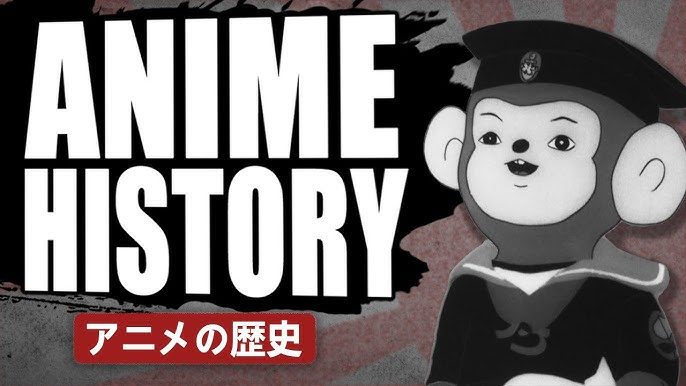
The oldest known Japanese animation currently discovered is Katsudō Shashin, sometimes called the Matsumoto Fragment. It is generally believed to date back to around 1907, though the exact year remains uncertain, and the creator is still unknown. That mystery makes it especially fascinating. Unlike modern anime launches, this was not a high-profile release with marketing and records behind it. It appears to have been a very early moving-image experiment made for projection devices. The clip itself is only a few seconds long and shows a boy in a sailor-style outfit writing the words ‘katsudō shashin,’ meaning ‘moving picture,’ before turning toward the viewer, lifting his hat, and bowing.
When the conversation shifts from the oldest discovered fragment to the birth of theatrical anime, the key year becomes 1917. That year is widely treated as the beginning of Japanese animation films in the cinema sense, with early shorts created by pioneers such as Ōten Shimokawa, Seitarō Kitayama, and Jun’ichi Kōuchi. One of the most important surviving examples is Namakura Gatana, or The Dull Sword, created in 1917 by Kōuchi. The film follows a foolish samurai who buys a useless sword, tries to test it on people, and gets humiliated instead of becoming powerful. Even at that early stage, Japanese animation was already experimenting with comedic rhythm, character action, and moral punchlines.
Another major turning point comes with feature-length animation. The first full-length Japanese animated film is generally recognized as Momotaro: Sacred Sailors from 1945, directed by Mitsuyo Seo. It is impossible to talk about the film without acknowledging its historical context. It was made during World War II as propaganda commissioned by the Imperial Japanese Navy. That gives it a complicated legacy. At the same time, it was also a major technical achievement and later became important to younger creators, including Osamu Tezuka, who would go on to shape the future of manga and anime. In that sense, the film stands at a crossroads between national history, visual innovation, and the later birth of the anime industry fans would eventually recognize.
The First Anime Ever Made: The Real Story Behind Japan’s Animation Journey
Television creates another split in the answer. Technically, the first made-for-TV anime series is often identified as Instant History, produced by Otogi Production and aired on Fuji Television in 1961. It consisted of short episodes about historical events and predates the title most people instinctively think of. That title, of course, is Astro Boy. Astro Boy arrived in 1963 under Osamu Tezuka’s Mushi Production and became the first major modern TV anime phenomenon, especially as a full half-hour animation series. Its success helped establish the production model, visual language, and long-form audience expectation that would shape television anime for decades.
That is why the real answer to the ‘first anime ever made’ question is not one name, but a timeline. Katsudō Shashin matters because it is the oldest surviving discovered animation fragment. Namakura Gatana matters because it represents the early theatrical birth of Japanese animated shorts. Momotaro: Sacred Sailors matters because it was the first feature-length animated film in Japan. Instant History and Astro Boy matter because television transformed the medium from experimental and theatrical work into something serialized, repeatable, and culturally massive.
Seen that way, anime’s beginning feels less like a single point and more like a slow awakening. It moved from tiny black-and-white experiments into cinema, then into full features, then into television, and finally into the global entertainment force audiences know now. That longer history makes modern anime feel even more impressive. The medium did not appear suddenly with one explosive hit. It built itself piece by piece over more than 100 years, and it is still growing.